‘Out of nothing’ The art of using and maximising the use of (by and large) artificial light to create a specific feel or effect.
The way in which light can be used and manipulated can be broken down into four fundamental elements which need careful consideration and use to create the desired effect.
Quality (of light)
The quality of the light used, whether it be Fluorescent tubes, or Tungsten bulbs, natural light or ‘professional’ lighting is measured in terms of how hard or soft the transition is from light to shadow. Technically speaking, a large light source will create a gradual transition from light to dark on the subject, whereas a more direct light from a smaller source will provide a more immediate transition. A good example of the use of a large light source (Softbox) to create a ‘gentle’ light which compliments portraiture very well can be found in the portfolio of Jean Baptiste Huynh.
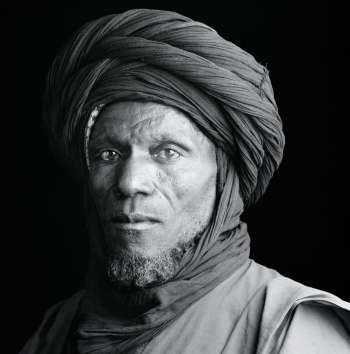 Huynh, Jean-Baptiste, 2003, Mali – portrait XVII
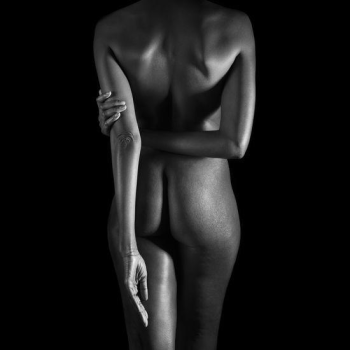 Huynh, Jean-Baptiste, Etude de mains 25
This technique can be used to flatter both soft and weathered skin alike.
Marco Grob on the other hand uses concentrated direct light onto the subjects face to give an altogether different effect.
 Grob, Marco.circa 2016. Mike Tyson.
The use of a harsh light makes it much more difficult to control the ‘spill’ and therefore harder to maintain a black background (though not impossible). Whereas with a soft light the background can still be but a short distance away to avoid any spill.
Contrast
Contrast can be best described as the difference (ultimately numerically) between the lights and darks of an image. Contrast goes hand in glove with quality but contrast is numerically quantifiable. Contrast can be lessened by the use of light (reflected or direct) to lessen the ‘darkness’ of thew shadow. Contrast can be measured as a ratio, a numeric value given to the light area versus one given to the shadowed area. This is/can be measured using the spot meter in your camera or by the use of a hand held light meter.
Direction
The direction from which a subject is lit is much easier to understand, and with a little bit of time easy to work out. In a studio, a subject can be lit from pretty much any angle, this includes from below, above and behind (backlit) which can create a silhouette effect. After the direction of the key light has been established, fine-tuning can be achieved with the use of fill lights for a selection of results and effects.
Colour
When we talk about colour in the studio it is important not to confuse this with subject or material light. We are talking about the colour of light that falls upon the subject. This can be created using filters which are placed over light sources in the form of gels or white light which is bounced off of coloured reflectors. An obvious example of this would be fireing a light at a gold reflector, bouncing the light onto skin, in turn giving the skin a rich and warm feel.
 I see!