Exercise
How does Bryony Campbell’s The Dad Project compare with Country Doctor?
Both Country Doctor & Minamata are very similar insofar as Smith is able to jump from one patient to another at will, and therefore the variation of subject matter is sufficient to hold the viewers attention and keep expeditions high as each page is turned. Bryony Campbell’s project, The Dad Project, is so purely linear that the strength of the project lies elsewhere. Ms Campbell (after discussion with, and with the consent of her father) records the last months of her fathers life as he succumbs to cancer. Campbell’s work is far more emotionally charged (yet understated in the work itself) yet, given that we pretty much know the outcome of the narrative before we get to the end, we are held, almost transfixed as we read each episode.
The Dad Project images are also augmented with the use of video & sound. Experiencing all three together bear testament to the adage “The whole is greater than the sum of its parts.”, and provide us with a very powerful body of work, leaving us I no doubt as to when it has come to an end.
Campbell mentions on more than one occasion that the project is a ‘gentle’ one, and I think it is a tender approach, but it sets up this juxtaposition between her relationship and feelings, and the finality of death.
What do you think she means by ‘an ending without an ending’?
I think a pointer to what she means by this is in what she says immediately after; “And I hope it always will be, it’s a relationship I’m still exploring”. Campbell was clearly, and understandably always torn between her roles as the Photographer/recorder and being the daughter/carer. I think that towards the end (of his life) she realised that undertaking the project in collaboration with her father was proving to be a way of dealing with the grief, though I think her early fears were that she was in some way missing out on the pre death grieving process.
Saying at one point “The Dad Project has put my heartache to such positive use. Though this small furry book isn’t much of a substitute for Dad’s presence, the journey I’ve been on to make it has been my most inspiring yet. Most significantly because I’ve been on it with my dad – every day since he died.” shows me how she has accepted his departure and yet has been able to work with his memory in a positive way. By continuing to bring this body of work to fruition after her father had passed on she was able to spread her grief and at the same time infuse it with positivity (“I did an interview for BBC world service a few months after Dad died and as I was leaving the interviewer asked me “Is it hard to talk about the experience and then just get on with a normal day? Do you feel the project is stopping you from moving on?” Her question stuck in my mind. I didn’t find it hard to get on with my normal day at all, as my dad and the project were very much a part of my normal day. I had no desire to ‘move on’ as I felt no disadvantage to staying with the memories. I have the process of The Dad Project to thank for this.”). So we can clearly see that Ms Campbell was able to accept her fathers passing, and treat it as more of a transition period within her project, and because her father had passed on so much information during the time leading up to his death, Campbell was able to work on/through his death, processing and using her information and memories long after his physical departure.
Bryony Campbells affirmation of this in her own words; “When we are weighed down by our memories we have to be careful not to access them at inappropriate moments, for fear of exposing our fragility. I consider myself fortunate that the memories of my wonderful dad’s death enrich me rather than depress me, and fortunate for feeling comfortable talking about it. It means I can do it as often as it may be relevant, thus keeping his memory ever present. I am so grateful to my dad and for giving me a way to keep moving forward with him, and to photography for making it possible.”
Project 2 Image and text
Exercise two
13th May 2020 Interpreting a poem using the medium of photography. Choose between: The Tiger by William Blake The charge of the Light Brigade by Alfred Lord Tennyson The contest of Sauron and Felagund, from The Lay of Leithian The fall of Fingolfin from The lays of Beleriand The Tiger- An age old favourite, dark, mysterious and strong. Quite singular in it’s objective/goal. Deeper meaning can be read into it (religious) but the ‘feeling’ that is presented is singular. Sauron and Felagund- A great poem which describes a onesided fight to the death, which swings too and fro, well written with rhythm but quite short. The fall of Fingolfin- Very similar to the above, only longer. The imagery is powerful, but the emotions and response are limited.
The charge of the Light Brigade- Has depth and rhythm to it, maybe more importantly is based on fact, and is about human emotion. This is easier to relate to.The charge of the Light Brigade Thoughts & Imagery
- The poem has rhythm, and reflects the galloping horses.
- Young men.
- Innocent
- Blindly obeying orders
- Superiors wasting lives
- blood
- dying
- Valour
- Hopelessness
- Fear
- Gun smoke and cannon noise
- Deafening
- Disorientation
- Claustrophobia
- Smell- Smoke, horse, leather
Photo’s
- Train wheels/ track- rhythm,
- Dust
- Cattle loading for the abattoir
- Bull calves destined for the truck as soon as they are born. Destiny
- Statue of Robert Blake in town. Up on high, giving his order, unaware of the people below
- Cattle in a crush- the noise and claustrophobia
- Eledhwen’s disco ball, slow shutter speed – disorientation and confusion.
- A person stood against something very big (building) – represents hopelessness
- Back turned against a crowd – the retreat, the exposure.
- A garlic press- Being crushed on both sides by cannons
- A broken red rose touching the floor – the spilt blood.
- Scissors cutting the stem of a flower, the flower falling. – soldier falling from saddle of horse.
- Tall flower next to healthy lush small flower being trodden on. – Old generals stand by whilst young ordered to their death.
- Union Jack
6th May 2020 Having seen Uta Barth’s work for the first time today I had an idea that is a variation on something she had said; “inverting the notion of background and foreground”. Maybe I can look to create images that have an interesting (or not) foreground which is blurred to abstraction with a sharp background (interesting or otherwise). https://bombmagazine.org/articles/light-looking-uta-barth/ People often refer to my work as “out of focus” and I always counter that it is perfectly in focus, the camera just happens to be focused on an unoccupied point in space. So I am photographing the volume of a room instead of its walls, the atmosphere of a rainstorm instead of the landscape the rain falls on. The visual residue of making images this way is the unfocused walls and blurred street scenes. …. I think more about a Robert Frank photograph I love. It is part of The Americans and is a view from a widow onto the rooftops of the town. He moved the camera back to include the curtains of the window he is looking out of and thereby moved the attention to himself as the onlooker, rather than just the scene itself. It is a small move, yet it totally changes the reading of the image. I have used that same move in much of my work.
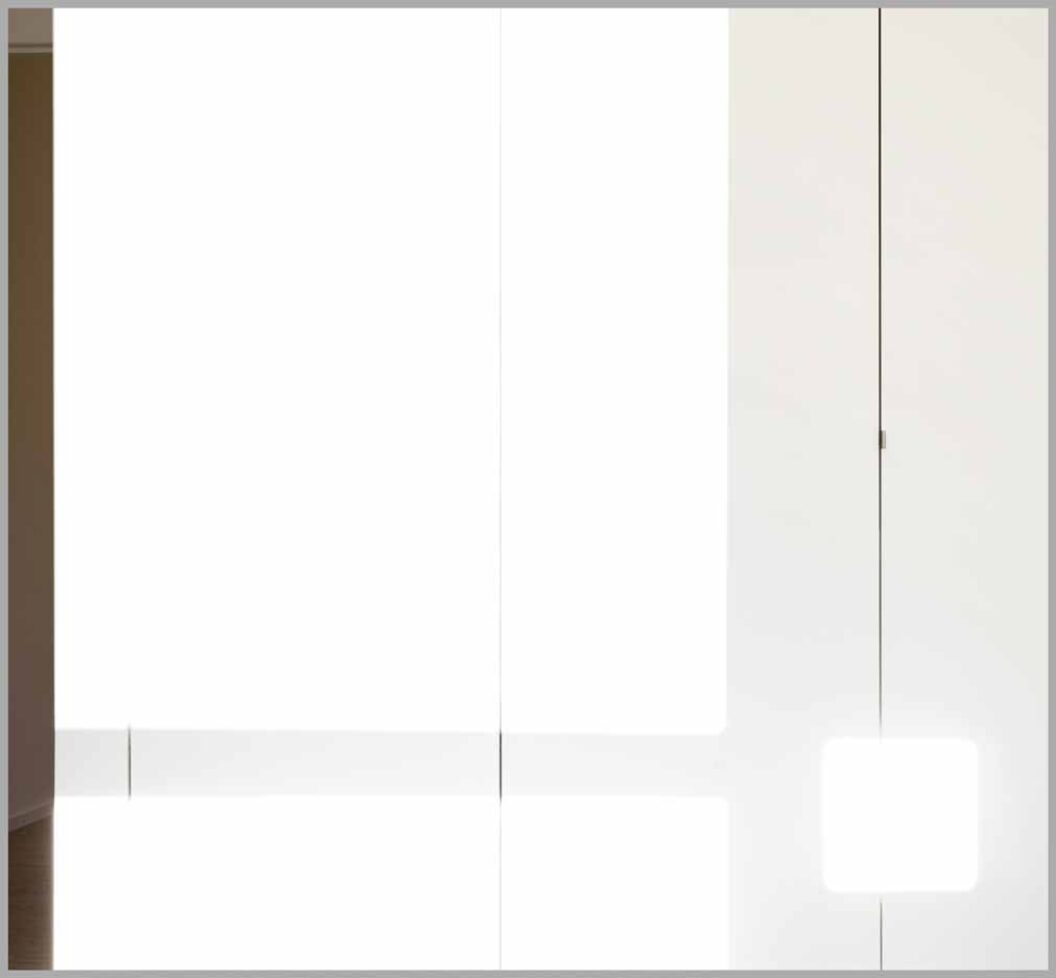
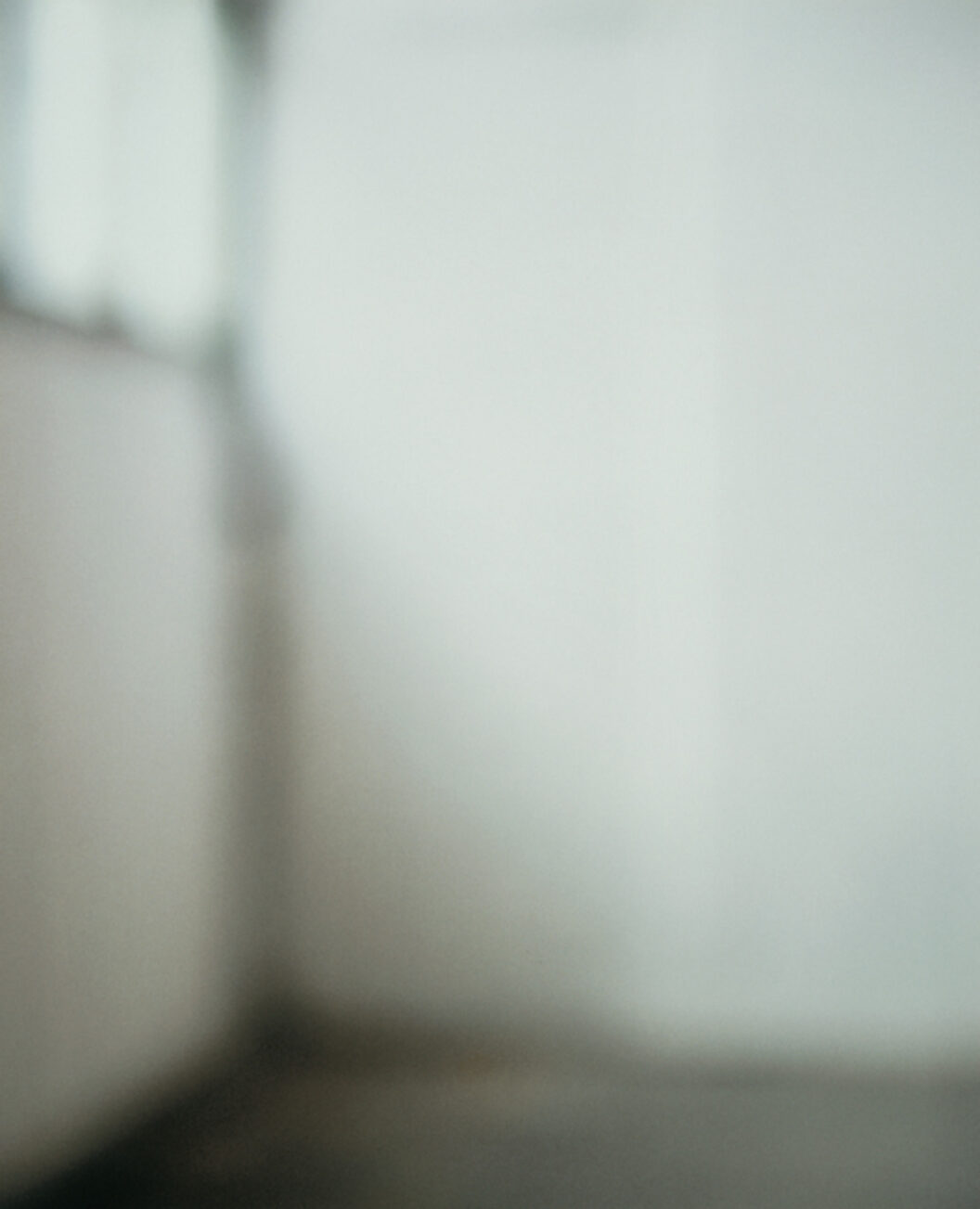
Image on left inspires. Image on the right, and the whole ‘space in between’ leaves me feeling like it is a case of ‘the kings new suit’!
5th May 2020 Spoke with tutor (Matt White). First wake up was that my coursework Blog is not the place to also advertise what I like/do (photographically) outside of the constraints of course. It also became clear (obviously so), that keeping a learning log separate from but within my work blog is the way to go. Up until now I’ve kept bits in with course work and other bits in here! Workwise, I raised the subject of my interest in ‘nude’ and ‘blurred’ work. Matt’s reaction to nude was q strong, and his views enabled me to start addressing deeper issues beyond ‘human form’. Although I don’t see myself as a middle aged letch using the pretext of ‘artistic photographer’ to get any sort of self gratification, I realised quickly and clearly that nudes for nudes sake is not enough. I think that as a medium, it has been done to death (very early on). Probably my first inspiration within photography was seeing the work of Edward Weston. Even though his work was (relatively) new, there are still weak images that are still often put up for viewing that really, to be honest, are I think soft porn shot by him for self gratification.
I still think that my distorting with motion blur and graining maintain my own reason d’être. I have just discovered the work of Brett Weston. This has more in common with the sort of thing that makes my heart beat a little faster. Although I had these feelings when I first saw Edward Weston’s work.
He is using the body as a canvas. This is something I’ve thought about a lot, but without being able to encompass in a sentence.
12th September 2019 Rhetoric. The art of using language most effectively. In photography this equates to the use of colour and the combination of colours. e.g.1; Photographic ‘style’ is like the choice of certain words in a speech. e.g.2; Black and white or colour. e.g.3; What to include, or maybe more importantly, what not to include in an image. For example, a footballer kicking a ball at the goal, if the image shows the goalkeeper diving, and the posts and net but no ball, doesn’t it seem incomplete and slightly pointless? e.g.4; What is or isn’t in focus!
8th September 2019
Rubinstein and Sluis make the distinction that citizen photojournalism is from the subjective perspective of the participant, rather than what they call ‘the position of the detached observer’ occupied by the professional journalist (Rubinstein and Sluis 2008: 11). Photography by Stephen Bull. Routledge 16/12/2009.
7th September 2019.Objective photographs/photography.
The current viewpoint on the above is that it is not possible for an image to be objective. I think we, as critics and observers of the practice, are falling into the often set trap, of trying to make everything either black or white (It is a human mechanism that we try to enforce so as to make it easy for our brains to catagorise things, and in doing so accept them within the confines of our mental rule book, safe in the knowledge that it conforms with the accepted norm). As individuals, of course we all see things from a broad spectrum of viewpoints, that is the very nature of human beings. As such, even with the best intentions, it is impossible to take a single image with a camera and produce something that contains all of the information required for others to then interpret identically!
For an image to have been objectively successful, it requires the end result to be that everybody arrives at the same conclusion. This is of course absurdly impossible! In summary, I believe that many photographers genuinely want and try, in earnest, to shoot objectively, but lets be honest we’re shooting for the moon!
Even if we attach a camera to a drone and send it off to a location, with a timer on to take random picture, can the results then be called wholly objective? With minimal human input, we can still only see what is within the frame of the image. If it were an image of a calm tranquil beach, what is to say there isn’t a volcano erupting a short distance away, or a busy city street butting right up to the beach (e.g. Copacabana beach). If that same camera were to take a shot in a city street of an altercation between a number of people, it tells us nothing more than exactly that (and what is to say that that isn’t a scene from a film being acted out?).
 I see!