Exercise 1.3 (2) Line. Forward
Here are seven images which have been taken ‘face-on’ to the subject matter. The object being to ‘flatten’ the depth of the images. Sometimes this can be used to good effect by creating a more abstract photograph, though this is not always the case, and requires a bit of forethought.
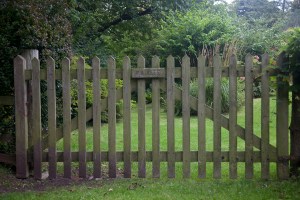
Image 1. The main subject of the image has very little depth to it anyway, and so by photographing it head on, make it a very static (not to mention boring!) photograph. Given the nature and purpose of a gate, it can be said that this is enhanced by the technique used to record what it is I.e. it is there as an obstacle, to bar entry.
Image 2. I find doors and windows very interesting (I’m currently working on a project entitled ‘Portals’) as they always ask the question ‘What is behind here?’ This particular shot is quite interesting insofar as half of the window is open, and inviting you to look in, whilst the other half is shut but compromised by the open side. All of that said, it is still a very flat image that is crying out for a better composition. It could possibly have been made even less dynamic by having been composed with the window right in the middle of the frame.
 1
1 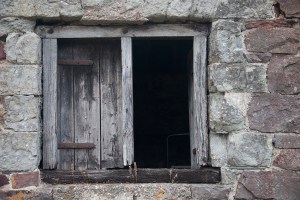 2
2
Image 3. This photo was taken ‘head-on’ to the top part of the sign. The lower part of the sign is ever so slightly turned inwards, but this is enough to give the image a sense of perspective and allows the eye to drift into the background even though it is blurred and uninteresting. From this I have learned that it doesn’t take very much of an angle for the eye to moved through (as opposed to across or around) the image.
Image 4. This image is very similar in construction to the previous one. Although the subject matter is quite flat and square on, the logs are stacked in a pile which does not create a vertical wall, but ramps away from the camera. As a result of this, the sides of the pile taper slightly. Coupled with the lines created by the edge of the path, again there is an ‘excuse’ fro the eye to wander away from the subject matter and through the image. To achieve the desired effect, I should have filled the frame with the horizontal lines of the logs so that they neither started or finished wholly inside the frame.
 3
3 
 4
4
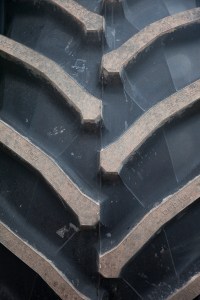
Image 5, 6 & 7. Having learned from the previous images I then started to think about filling the frame. Image five and the following two are solid images that cannot be seen through, thus making it very easy to fill the frame. What does happen though, is that in all of the following images the lines leave the frame at multiple points. I think that because there is no perceivable depth, the whole of the image has an abstract feel to it. It is difficult for our brain to reconcile what it is seeing as we see almost everything in three-dimension on a daily basis. Image seven is slightly different from five and six because it is more three-dimensional and therefore has a little bit of shadow which will naturally create a sense of depth. It is also made up of diagonal lines which will give it a much greater feel of movement about it.

 5
5 
 6
6
 7
7
Having shot and reviewed each of my images in both ‘Exercise 1.3’ 1 & 2. It is time to compare both sets and see what is to be learnt from this exercise.
The images in part two leave the viewer wanting something, anything. You are left frustrated and disappointed. The eye has nowhere to travel. What lines there is force the eye out of the frame of the picture. There is a feeling rather like a river emptying into the sea, just dissipation, frustration and disappointment!
When you look through the images from part one of the exercise, the is a totally different feel to them. Certainly images one, two and eight feel very ‘fast’. There is a sense of rushing which is created by the, not only diagonal, but converging lines. In images three, four, five, six and seven the vanishing point is within the frame of the image, and there is a lot more information to take in along the way, it becomes more of a journey than a dash. All of the images in Exercise 1.3 (1) have a starting point & vanishing point which are within the frame of the image. This this give the whole composition a specific start and end to ‘the story’.
Exercise 1.3 (2) Line. Contact sheet
 I see!