Exercise 1.3 (1) Line. Forward
Here are eight photographs that I have taken with a view to illustrating how, by creating/using diagonal lines, you can impart a sense of depth within an image.
Image 1. This is a row of Poplar trees which I pass every morning and evening going to and from work. The trees stretch for about one hundred metres, which, in conjunction with the height of the trees, made it very easy to create a sense of depth, or perspective. The solid lines created by the road give some element of strength and form to the image too. If I were to take the image again, I would perhaps put on a pair of boots and walk into the field on the left so as to be able to capture the trees a little more full on. This would have the effect of elongating the convergence of the lines and therefore making full use of the frame.
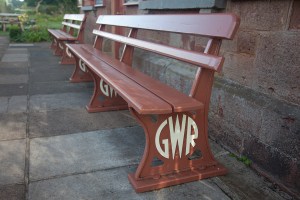
Image 2. The main difference here is the size of the object being photographed. Unlike image one, I was naturally shooting from above. So to maximise the sense of depth, I had to get down to a point where I was level with the seat height and then get in as close as I could so that the front of the seat comfortably filled as much of the frame as possible. Again, I could have come round to the left a little more, but with hindsight, I like the accidental rectangle implied in the top left corner. In conjunction with the actual frame of the image, it creates a box/tunnel effect or feel about it.

 1
1 
 2
2
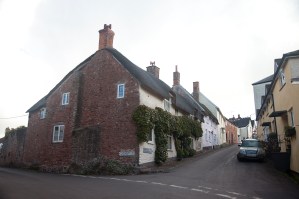
Image 3. This image is a little more complex than the previous two for a couple of reasons. The first is that there are no solid continuous lines but a complex selection of lines which augment and ‘solidify’ a strong sense of depth. There is a lot less repartition in this picture, but more detail which slows the viewing process down and makes the ‘journey’ more interesting. The second complexity to this image is that there is not one but two vanishing points which further strengthens the three-dimensional feel to this image. There are the two sets of lines created by the tops and bottoms of the houses on either side of the road, and then another perspective created by the top and bottom of the gable end of the house running away to the left of the picture and out of the frame. This does cause a little disharmony, but in this particular shot is unavoidable.
Image 4. This was a very rewarding image to have taken and to be able to present. The composition is so tight, it is a shot in a thousand. I first saw the possibility when I noticed the cast shadows looking roughly like arrows (these were the diagonals I was looking for). It was then a case of moving about until they appeared to point at something in particular, which turned out to be the tree in the background (which luckily was the only big thing in the background, thus avoiding any clutter or confusion). The three other things that I needed to do were; make sure that the tree in the foreground was parallel with the frame, that the horizon was horizontal and about one-third of the way up the image. This was, to some extent governed by how low/high I had to stand, so that background tree had its own space within the frame, and was not obscured by the tree in the foreground. If I were to shoot this again then I would take more care to ensure that I don’t get my own shadow in the image (bottom right)!

 3
3 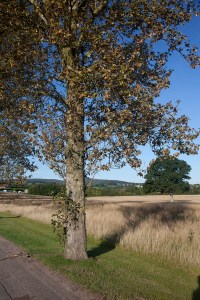
 4
4
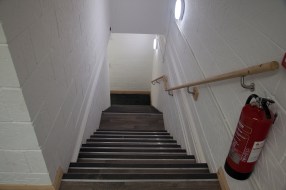
Image 5. Looking down the stair well! I was able to stand square on to take this photograph and still get that sense of depth. What is quite interesting is the amount of lead lines, and more interesting still, the fact that they don’t all go to the same vanishing point. Even the horizontal lines create depth. This is because we assume that because it is a staircase, all of the steps are the same width. Yet the photographic width of each step is smaller the further you get away from the camera. So the main thing that I have taken from this image is that lines don’t have to be diagonal to convey depth. That said, diagonals are much more dynamic.
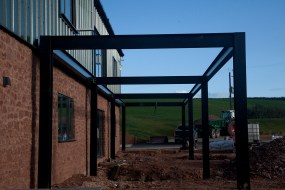
Image 6. Again, this picture was taken ‘head-on’. The strength and depth of this image are created by the strong, bold vertical and horizontal lines, which are concentric in form, being linked together by the unusually more subtle diagonal lines.
 5
5 
 6
6
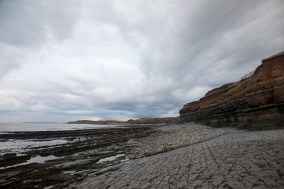
Image 7. I really like this image, and intend to ‘enhance’ the sky in Photoshop to bring out the drama of the shot (Shame I had to shoot it in ‘Auto’!). The beauty of this shot is that not only do all of the natural lines created by the solid rock (and the way it was formed)l head to a single vanishing point, the clouds do too. I think this image has so much potential as a stand alone framed photograph largely because of the cloud/sky creating that sense of breadth and depth.
Image 8. No exercise to illustrate depth would be complete without some railway lines! I have been careful not to allow the lines to disappear out of the frame, but intrigue is created by them disappearing behind the trees at the last moment. I also like the line coming from right in the left corner of the image. To me it imparts a sense of the train rushing past very/too close by, almost from over your shoulder.
 7
7 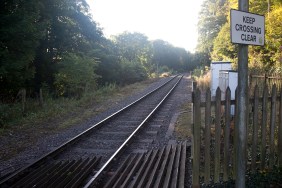 8
8
 I see!